-
Startseite -
-
De/En
-




-
De/En

The Emschergenossenschaft
River basin management from the beginning
The Emschergenossenschaft was founded on 14 December 1899, as the first German water management association. This served as a model for a whole series of further water management associations, including the Lippeverband, which was founded in 1926. With the start of mining activities in the early 19th century, hygiene conditions visibly worsened throughout the region as a result of flooding and stagnant wastewater. Only an overarching plan for the
region, regulating wastewater disposal and purification, drainage and flood protection, would be able to sustainably improve the situation for the population
along the Emscher and its tributaries.
Role model for further water associations
The Emschergenossenschaft is a public sector entity, paid for by its members – which include cities, municipal administrations, mining organisations and
businesses. We have been active in our region for 125 years. On the basis of this experience, we reliably deliver services in the context of the public sector –
without profit orientation and in the public interest.
Safe, clean and economical
In the environment around the Emscher and Lippe rivers, the needs of humans and nature are competing. As developers for the region, we want to achieve a sustainable balance bet-ween these needs. Living and working here should be just as possible as restoring ecologically friendly river land-scapes that abound with life – no simple task in a region that, were it not for our work, would regularly be underwater.
Located in the largest metropolitan area in Europe, between Holzwickede and Dinslaken, and in the neighbouring Lip-pe Region to the north, we are a modern and cost-effective water management organisation with a wide range of tasks:
• Wastewater treatment
• Care and maintenance of waterways
• near-natural restructuring of open sewers
• Flood protection
• Regulation of water drainage
• Management of groundwater and stormwater
• returning industrial river landscapes to nature
The Emscher
The Emscher is a right-hand tributary of the Rhine. It has its source in Holzwickede to the southeast of Dortmund, and after about 85 kilometres it flows into the Rhine near Dinslaken/Voerde. It forms the central water management axis of the most densely populated region in Germany. Characteristics of the river and its subsidiary waterways include a shallow gradient and low water levels.
The conversion
The conversion of an entire river system was a challenge on both the planning and technical levels, which even on a European scale remains unparalleled.
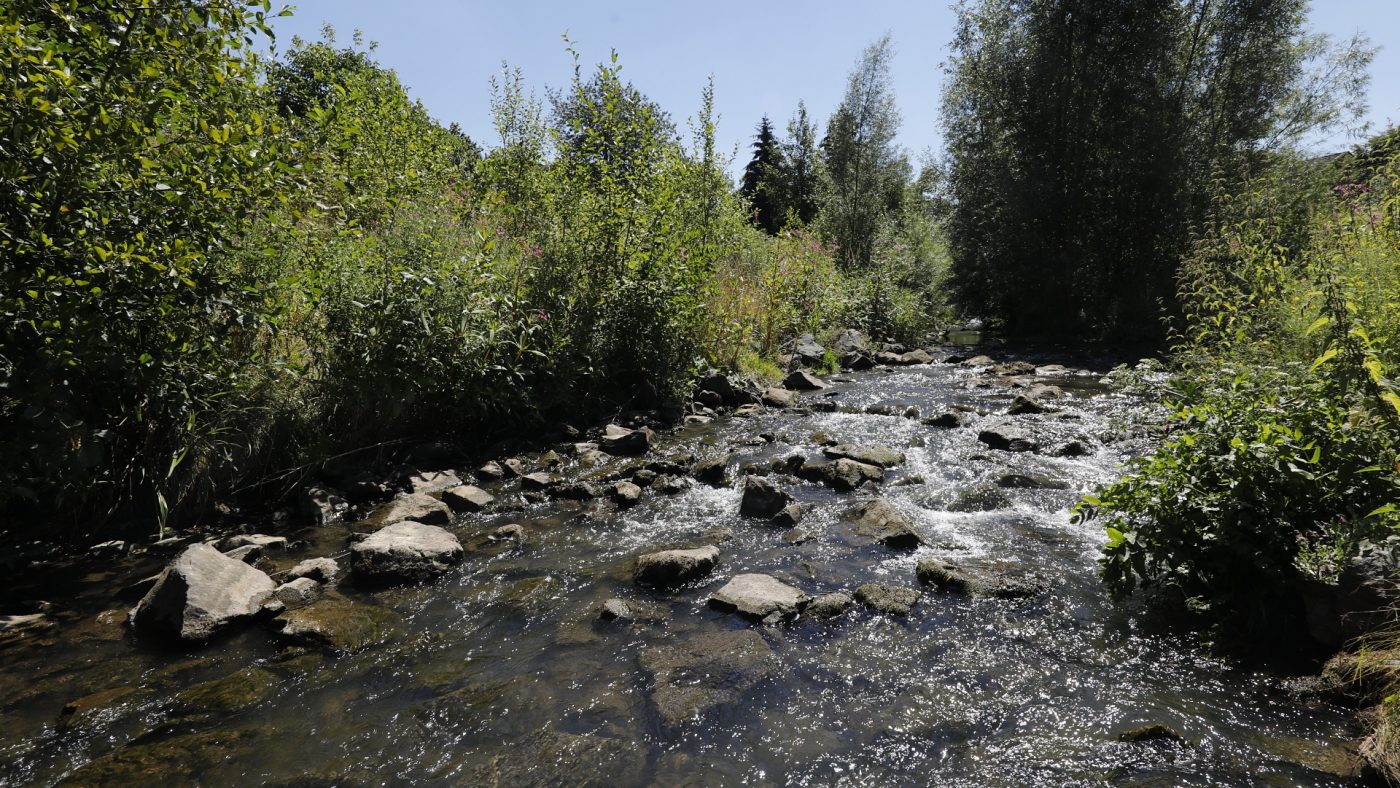
Along a stretch of over 80 kilometres through the middle of the largest metropolitan area in Europe, a river is returning, much of which existed for a long time only as an open wastewater channel. The Emscher conversion is one of the largest infrastructure projects in Europe, and a task of extraordinary dimensions, both technically and financially. Over a period of around 30 years, the Emschergenossenschaft has invested around 5.5 billion euros in this intergenerational
project. The conversion has changed the face of an entire region: Not just through converted, near-natural bodies of water with high leisure value, but through a wide variety of projects initiated in adjacent areas as a result of the Emscher conversion.
The Emscher Sewer
The new main artery of the Ruhr Area sewer system is the Emscher Sewer, into which the wastewater from the tributary sewers flows. The Emscher Sewer is 51 kilometres long, and stretches from Dortmund to Dinslaken. The sewer consists of reinforced concrete sewer pipes with internal diameters of between 1.6 and 2.8 metres. At a depth of ten to 40 metres, the wastewater flows at a speed of four kilometres per hour and keeps separate what does not belong together: clean river water and stormwater flows above ground, into and through the Emscher, while the wastewater is transported underground in the sewer.
